


IFA affirmation for Joy
This week our Ifa affirmation for Joy is here:
Ifa say Ayoyo go, ayo yo go, ayoyogo goma goma
We cast divination for Orunmila on his way with others to rub salt on his body.
He was told to make ebo, which he did
This is for us who have rubbed salt on our bodies.
The words of JOY is ours
The words of sorrow doesn't walk with Joy.
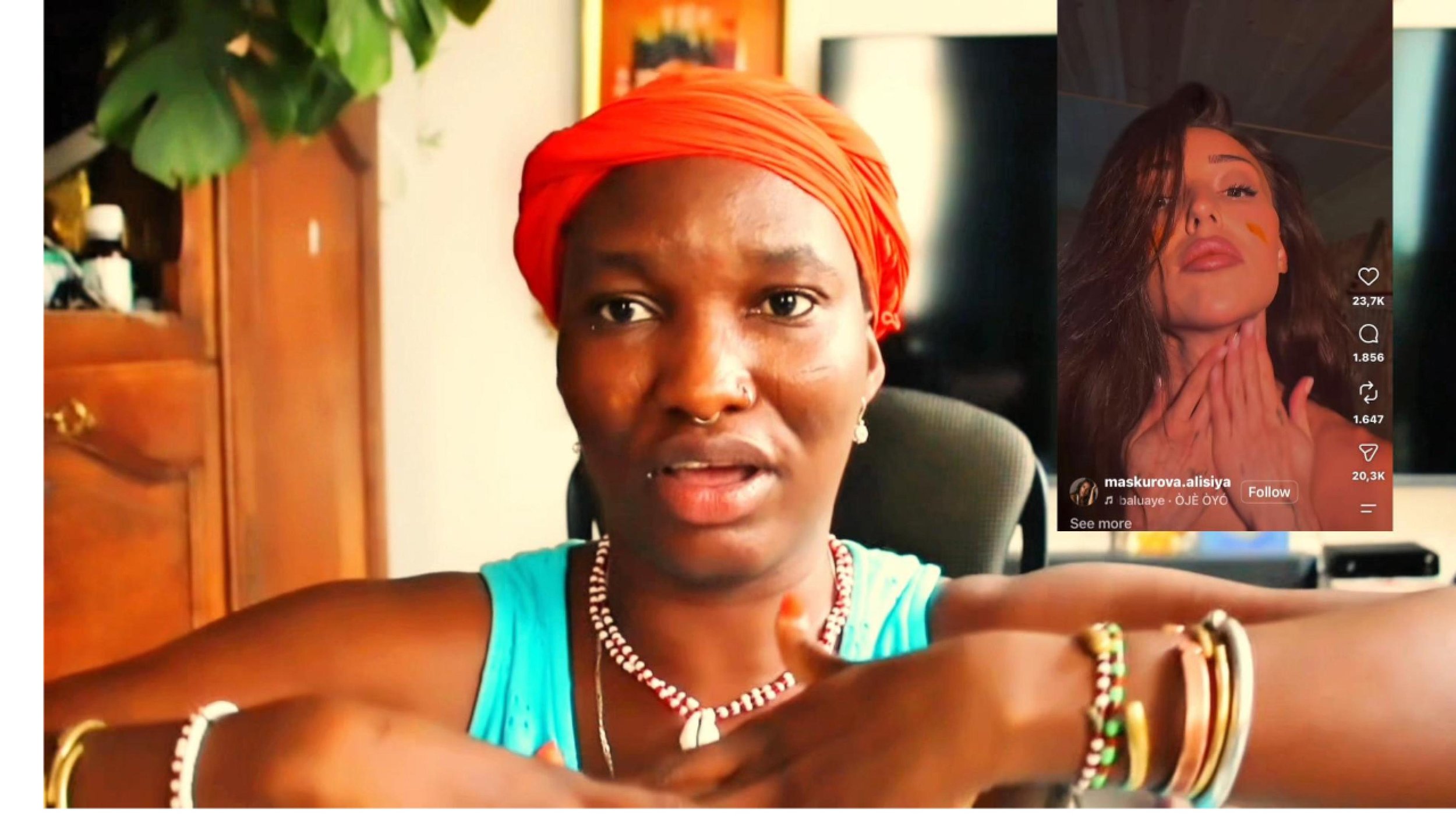
How to be a guest in Ifa, Orisa and Isese Yoruba Spirituality and Religion
August 20th of every year is Isese Day,
I think it’s great to address how we approach close spiritual practices such as Ifa, and the Òrìṣà as they become widely embraced among more people who are not Ancestrally Yoruba.
The fact that a spiritual practice is welcoming to all doesn’t mean that we all should lose sight of the fact that it is a closed practice and that it should be respected for the sake of everyone.
I’m helping people who are new to Isese to understand where their role is to be a guest. Yes, it’s open to people welcoming people to come in, but it’s a closed practice and putting any of the sacredness of our practice and ancestral heritage as something to become commodified and sexualised is disrespectful. I don’t fight for Orisa. I don’t fight for Ifa, I don't fight for themselves. But I’m just saying that when you’re a guest, know how to be a guest
I have decided to share weekly videos that can help us all in our journey with our spirit team on the journey to total liberation for all.
For now this is a space that i am going to invest in and share bits and pieces on social media but here, you get the real, the raw and the unfiltered messages and my downloads.
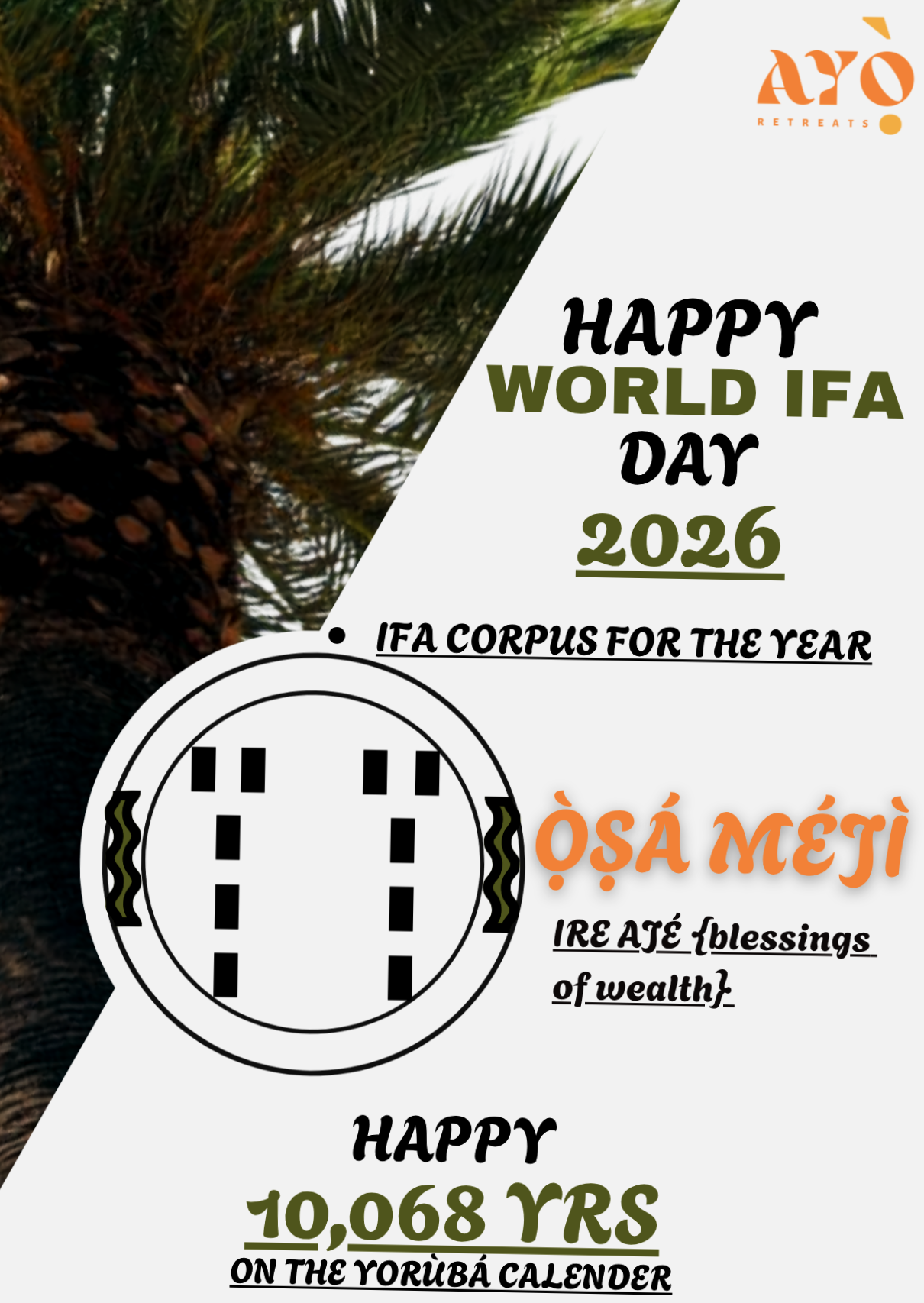
World Ifa Day: Happy Yoruba new year 10,068. The Odù ifá is Ọ́sá méjì bringing it Ire Ajé
Happy yoruba new year 10,068. The Odu Ifa ( Odu Ifa) for the year is Osa Meji.
May all the ire Aje (blessings of wealth) of this year be made manifest in our lives. Read more about Odu ifa interpretation
Ọ̀ṢÁ MÉJÌ Is the odu Ifá ( Ifá Corpus ) that showed up for Yoruba New Year ( 10,068 years) during the World Ifá Day being celebrated in Òkẹ̀ Ìtasẹ̀ , Ilé - Ifẹ̀ annually and it came along with Blessings of Wealth (Ire Ajé).
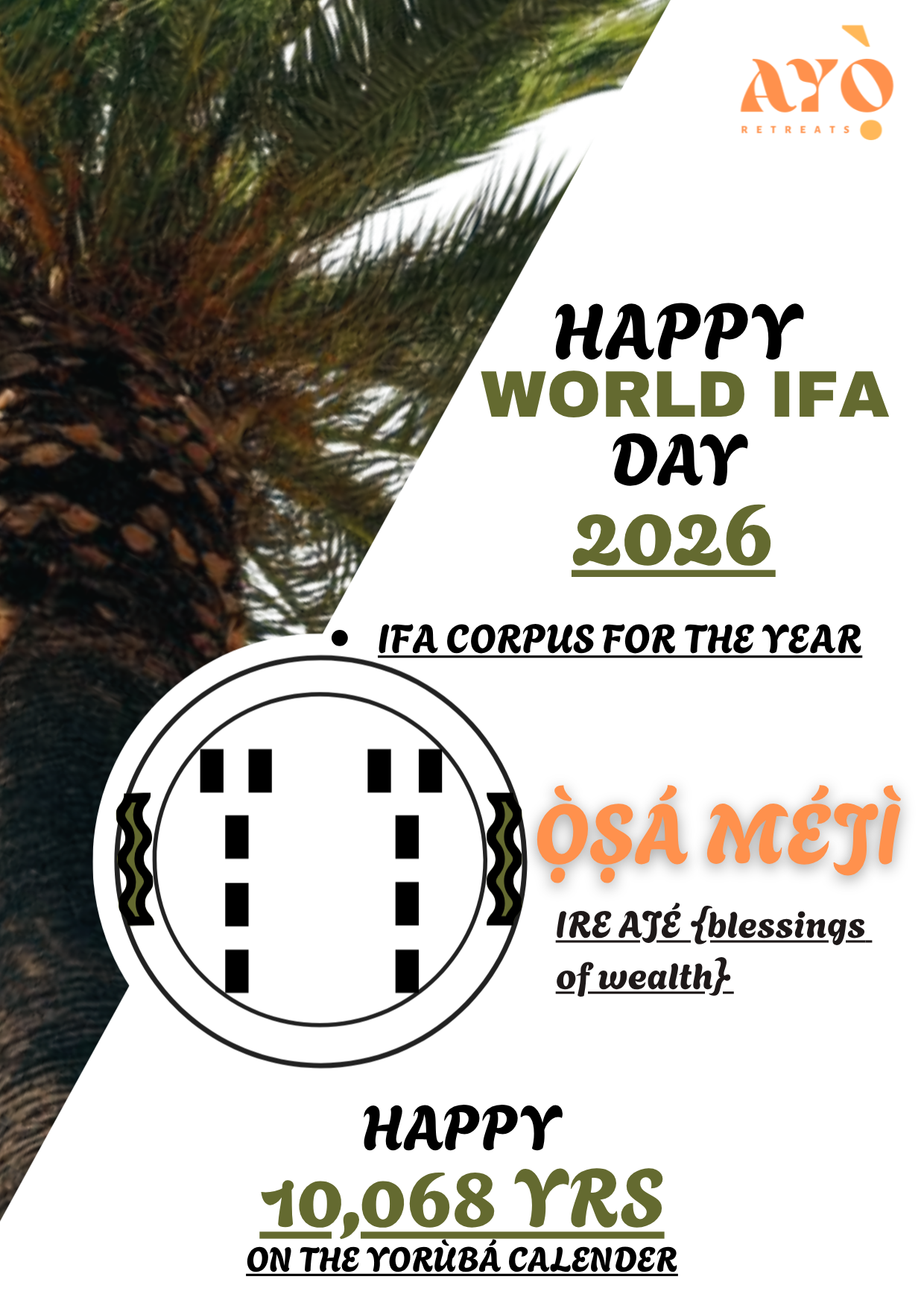
Ọ̀ṢÁ MÉJÌ Is the odu Ifá ( Ifá Corpus ) that showed up for Yoruba New Year ( 10,068 years) during the World Ifá Day being celebrated in Òkẹ̀ Ìtasẹ̀ , Ilé - Ifẹ̀ annually and it came along with Blessings of Wealth (Ire Ajé)
Ọ̀ṢÁ MÉJÌ: Divine Messages that follows the Odu
1.
Atàtà kúra kúra
Ẹnu Ẹlẹyẹ ò le è ran òkúta
Were the priests that cast divination for Ọ̀rúnmìlà
When Ọ̀rúnmìlà was in the midst of Elders
He was told to make sacrifices which he did .
Story :
Ọ̀rúnmìlà was the one in the midst of the Ìyàmi (Elders) being disturbed by them from time to time, he went for a divination and the Ifa corpus that showed is Ọ̀sá méjì, he was told to make sacrifice to Esu and always make appeasement to the Elders to seek their blessings not their troubles. Ọ̀rúnmìlà did and began to enjoy the riches and blessings of Ìyàmi (Elders).
Therefore, we are persuaded to perform sacrifice to Èṣù and feed the Elders to seek their blessings not destruction.
2.
Ósá méjì lákọ́jà
Ó bú yankan sójú ọpọ́n
They were the one that cast divination for Olúkòso Laàlú ọmọ Arìgba Ọta Ṣẹ́gun when he was in the midst of enemies .
He was told to offer Sacrifice which He did.
Story :
Ṣàǹgó was in the midst of enemies , He went for divination on how He could triumph, He was told to offer Sacrifice to Èṣù and some invocation was done to thunderstone as divine instrument for him to fight his enemies , that's how he became fearsome by defeating his enemies.
The Odù revealed we have enemies lurking around our lives and we are endeavouring to feed Ṣàǹgó in defeating them.
3.
Ìsáǹsàá méjì
Ló fìdí balẹ̀
Ló kí ara wọn jẹ́ẹ́jẹ̀ẹ́
Cast divination for Ẹgbẹ́ Ayé
(Earthly Astral mates) and Ẹgbẹ́ Ọ̀run
(Heavenly Astral mates)
Earthly Astral mates were told to offer Sacrifice to Èṣù and do some feedings for Ẹgbẹ́ Ọ̀run so they could assist them in not getting disgraced at whatever they touch on which they did...
This Odù implored us all to feed our Ẹgbẹ́ from time to time so they can be our supporters and defendants in all we lay our hands on, so we don't get disgraced at the end.
4. Ọ̀wìnì náá kéréjé
Cast divination for Ọ̀pẹ̀ Yẹ́kẹ́tẹ́ on the day he was on his journey to Owere
He was told to offer Sacrifice which he did.
Ọ̀pẹ̀ Yẹ́kẹ́tẹ́ says I will be wealthy like the people of Owere, I will be blessed by the people of Owere (town) .
Ifá implores us to feed Ifá from time to time so our hands can reach the riches or blessings we are seeking.
5. Oro tẹ́ẹ́rẹ́ awo inú igbó
Cast divination for Èjì - Ọ̀ṣà on his way to shave a wealthy head for Olokun.
He was told to make sacrifices which he did.
Èjì - Ọ̀ṣà if you become wealthy do not forget me
I have also shaved a wealthy head.
Ifa said we should make ebo to Èṣù if we have any mission or journey we are about to embark on that we will come home with blessings .
Entities that rule the ifa corpus of the year :
• Èṣù
• Orí
• The Ìyàmi (Elders / Witches)
• Ifá / Ọ̀rúnmìlà
• Ṣàǹgó
• Ẹgbẹ́
Do's
• Respect and adoration to all women (both young and old)
• Regular Appeasement to the Ìyàmi (Elders)
• Regular feeding to one's Orí
• A feeding to Ṣàǹgó
• Avoid arguments and fight
• A feeding to Ifá
Don'ts
• Don't leave your hair unkempt (if you do shave hair, don't let it get too full before you get it shaved)
• Don't disrespect women (both old and young)
• Be cautious and conscious of what you eat and say (be careful with your words , it remains the blade to shape you or destroy you)
• Do not forget or disregard the Entities that owns this new Year, the Ìyàmi
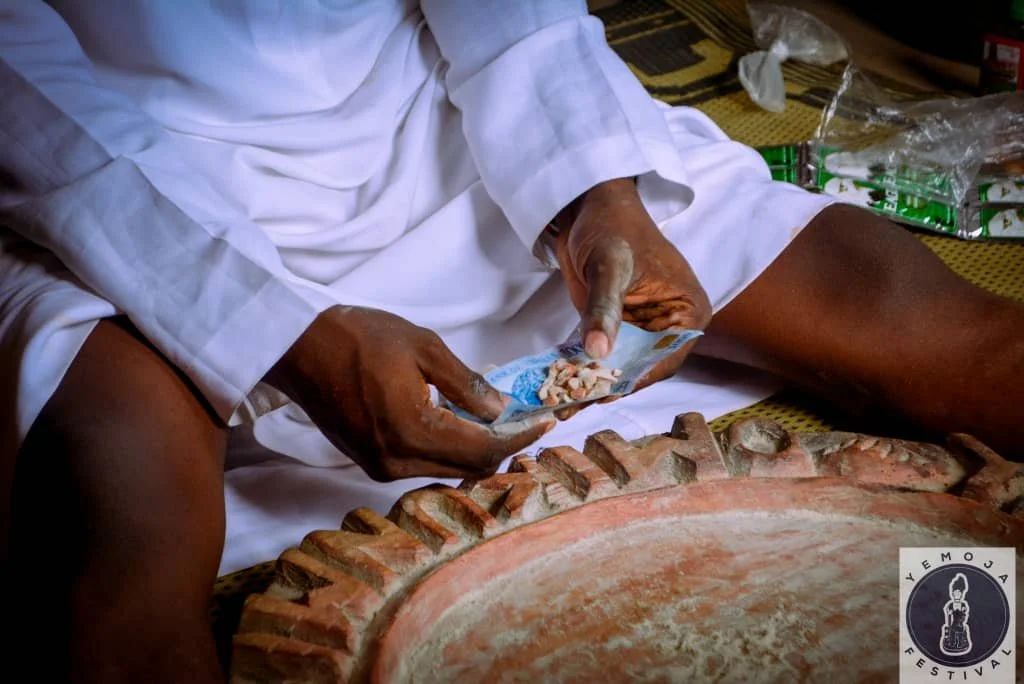
Key pillars to embody on your path to Ifá
For those newly embarking on the path of ìṣese and ifá, let these pillars guide your steps:
The Primacy of Ori: Before any plant, medicine, or material, there is Ori. External aids are secondary and can falter, but your inner divinity (your Ori) is the most reliable foundation for a balanced life.
The Necessity of Divination: Orunmila stands as the witness to our destiny. Because the nature of existence is ever-changing, we must seek guidance through divination. We remember the wisdom: Today may not mirror tomorrow, which is why the Babalawo seeks the counsel of Ifa every single day.
Alignment and Devotion: Seek to know the Orisa that claims your head. Once you have found your path, walk it with practical patience. The words of Ifa are not mere stories; they are the map to your survival and prosperity.
The Cycle of Transition: Never forsake your Isese, for these traditions are the bridge between worlds. We do not view death as an ending, but as a sacred transition in the continuous cycle of existence.
A Sacred Responsibility Devotion is a lifelong commitment. If you are not yet ready to nurture your Ikin Ifa or honor the Orisa daily, wait. To possess these icons is to enter a contract of total submission; to abandon them is to lose your way.
Let these words settle in your heart. We will continue this conversation soon.
Ire oo
Àṣẹ
Babaláwo Onífádé Olánrewájú Egbélàdé

The Spiritual Battle for Liberation: Decolonisation and Inclusion Are Not Failing—Or Are They?
Is it decolonisation or liberation that we’re really after? For what feels like centuries, eons, even a lifetime, the African soul has sought emancipation. Freedom; Belonging; Most often, it looks like a desperate need for acceptance or an acceptance of the status quo, validation of our humanity in a world that daily berates and dehumanises us.
Written: Adéọlá Naomi Adérèmí
Is it decolonisation or liberation that we’re really after? For what feels like centuries, eons, even a lifetime, the African soul has sought emancipation. Freedom; Belonging; Most often, it looks like a desperate need for acceptance or an acceptance of the status quo, validation of our humanity in a world that daily berates and dehumanises us.
But here’s the question we keep avoiding: can there ever be true liberation without full spiritual emancipation?
In my 37 years, I’ve been inducted into a club of highly educated, cultured, and what some might call “privileged” Africans. The “lucky ones.” Those whose lineage, we’re told, remained relatively “untouched” by the raging machine of imperialist capitalism. But can any African truly claim to be unimpacted? In a world steeped in imperialist militarism and globalised capitalism, is anyone truly exempt? Writing this essay in English alone is proof that none of us are untouched. All of us are socialised, indoctrinated, even to perform the values of white imperialism and capitalism.
I ask again, what of our liberation?
Awakening is a choice. But it’s a hard one. Liberation demands we unlearn these values, rip them out from ourselves, our communities, and the world we inhabit. At the very least, this is what the sacrifices of our Pan-African ancestors fought for; a world where Africans see themselves truly, fiercely, as they were before colonialists arrived with their dehumanisation, their greed, and their relentless imperialist capitalism.
In the last 20 years, countless movements have risen to address the position of African descendants in 'default white' spaces, the structures never designed for us, much less with us in mind. Yet, in my work with clients who are deeply invested in liberation for themselves, their organisations, and the collective; I notice a tension. A hesitation. They desire freedom, but they struggle to embrace their full Africanness and spiritual being.
Why?
Here’s the thing: white supremacy isn’t just a system. It’s a belief, an ideology. The idea that whiteness, its people, culture, values are inherently superior isn’t exclusive to white individuals. Through the violent interruption of African, Asian, and other civilisations, whiteness has seeped into all global consciousness. It is embedded in colonial education, social frameworks, and everyday norms. This means that anyone, yes, anyone can act as an agent of white supremacy, knowingly or unknowingly.
So, back to the question: are we ready for full liberation? Are we willing to unshackle ourselves, spiritually, from white capitalist supremacy?
Because here’s the truth: decolonisation,diversity and inclusion as we’re taught to pursue it, often feels like trying to squeeze into a mould that was never meant for us. A mould that was designed to suffocate our spirits. How can you “decolonise” the coloniser? The institutions we’re trying to reform exist to uphold imperialist white supremacist ideologies. They were built on the principles that divided our continents, enslaved our people, and exploited our resources. To sit at the table of these institutions is not liberation. It is a distraction. It is a wasted lifeforce.
Let’s be clear: white supremacy is more than a system, it’s a spiritual domination. Its rituals such as slavery, colonialism, police brutality, capitalism, genocide, ecocide are spiritual acts. If we are serious about decolonisation and liberation, we must begin at the spiritual core of our African spiritual essence.
What does that look like? Let’s explore that together next time in the second part of this series of essays. For now, listen to this conversation I had with Timil on the topic [here].